Roof Rack vs. Roof Rail - Choosing the Best Solution for Your Adventure Needs
Preparing for your next adventure, one of the first equipment decisions is whether your car needs a roof rack or roof rails — and the two are often confused. The short answer: roof rails run front-to-back along your roof and are usually factory-fitted; a roof rack (cross bars) mounts across them and is what actually carries your load. Most setups need both, working together.
What's the Difference Between Roof Racks and Roof Rails?
Roof rails are the long bars fixed along the length of the roof, from windscreen toward the boot. Many SUVs and estates leave the factory with them. On their own they carry little — their job is to provide mounting points.
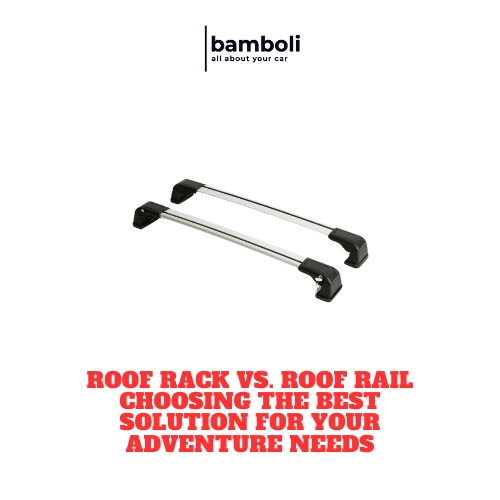
A roof rack (cross bars) mounts across the rails, side to side. This is the load-bearing part: roof boxes, bike carriers, kayak cradles and cargo baskets all attach to the cross bars, not to the rails.
So the real question is usually not "rack or rail" but "which cross bars fit my rails" — and if your car has no rails, "which rack system fits my bare roof". You can browse both in our roof rack and roof rail collections, listed by vehicle.

Cross bars mounted on factory rails — the rack carries the load, the rails anchor it.
Benefits of a Roof Rack
- Real carrying capacity — bulky items like tents, bikes, skis and kayaks travel on the roof instead of eating interior space.
- Convenience — strap the gear on, check it, go. Loading and unloading is quick once the rack is fitted.
- Safety — properly secured cargo can't shift around the cabin or block your view.
- Versatility — the same cross bars accept different attachments as your hobbies change: a box this winter, a bike carrier next summer.
- Aerodynamic options — modern low-profile bars keep wind noise and fuel impact small.
Benefits of Roof Rails
- The foundation — rails give cross bars something solid to clamp onto, spreading the load into the car's structure.
- Flexibility — with rails fitted, you can add or remove cross bars and accessories in minutes.
- Looks — rails give an SUV or estate its finished profile, which is why many owners retrofit them.
Roof Rack vs Roof Rail: Which Should You Choose?
1. What will you carry?
Rails alone are enough for nothing heavier than decoration. If you'll actually transport gear, you need cross bars rated for the weight — see our complete roof rack guide for choosing by load.
2. What does your car already have?
Raised or flush rails from the factory? You only need matching cross bars. Bare roof? You need a full rack system with door-frame or fixed-point mounts. Fit is vehicle-specific either way — a set made for an Audi Q7 won't fit another SUV.
3. Budget
Cross bars for existing rails are the affordable route. Retrofitting rails plus bars costs more but gives the most flexible setup long-term.
| Factor | Roof rails | Roof rack (cross bars) |
| Direction | Along the roof | Across the roof |
| Carries load? | Mounting points only | Yes — the load-bearing part |
| Typically fitted | Factory or retrofit | Owner-installed |
| Accessories | None directly | Boxes, bike/kayak/ski carriers |
Installation and Maintenance Tips
Installation
- Buy vehicle-specific: check the product's make, model and year range before ordering.
- Follow the manufacturer's instructions: each mounting system torques and clamps differently.
- Check your work: after fitting, shake the rack firmly, and re-check tightness after the first drive.
Maintenance
- Inspect periodically for wear, rust or loose fasteners and fix them promptly.
- Keep it clean — washing off dirt and road salt prevents corrosion.
- Re-tighten bolts a few times a season, especially before long trips.
Frequently Asked Questions
What is the difference between a roof rack and a roof rail?
Rails run along the roof and provide mounting points; the rack (cross bars) runs across them and carries the actual load.
Can I fit a roof rack if my car has no roof rails?
Yes — bare-roof rack systems clamp to the door frames or to fixed mounting points hidden under trim covers. They're just as secure when fitted correctly.
How much weight can a roof rack or roof rail carry?
It varies by product and by car — both the rack's rating and your vehicle's roof load limit (in the owner's manual) apply. Stay under the lower of the two.
Are roof racks and roof rails compatible with all vehicles?
No — fit is specific to the vehicle's roof type, rail profile and spacing. Always buy a set listed for your make, model and year.
Do roof racks and roof rails affect fuel efficiency?
Slightly, through added wind resistance. Aerodynamic bars minimise it; removing the rack when unused eliminates it.
How should I maintain my roof rack or roof rail?
Clean regularly, inspect for rust and loose fasteners, and re-tighten bolts periodically — details in the maintenance section above.